

Getting Skills Right: Good Practice in Adapting to Changing Skill Needs
This report identifies effective strategies to tackle skills imbalances, based on five country-specific policy notes for France, Italy, Spain, South Africa and the United Kingdom.

AI Now 2018 Report
Building on the inaugural 2016 report, The AI Now 2018 Report addresses the most recent scholarly literature in order to raise critical social questions that will shape our present and near future.

The 2017 Sustainable Shared Value Report
Businesses exist to serve shareholders and staff. However, can businesses add value to society and their local communities? This report by Roger Warnock examines the principles of business driven, sustainable economic growth with a moral compass.

Creative Hubs: Understanding the New Economy
This British Council report has been commissioned to better understand the diverse value, processes and motivations of creative hubs and in doing so, analyse how best to support and stimulate the wider creative economy they are rooted in, particularly in times of political and financial uncertainty.

The Geography of Creativity in the UK
This report – a collaboration between Nesta and Creative England – reveals hotspots of creative activity in all nations and regions of the UK, and produces data that economic development agencies and policymakers charged with promoting business growth can use when setting strategic priorities.

The geography of the UK’s creative and high–tech economies
This NESTA report is the first systematic analysis of employment in the UK’s creative and high-tech economies. It analyses their size, growth and distribution across the country.

Now is the Time to Innovate: The Road to 3 per cent
In this report, the CBI calls for a commitment to spending 3% of GDP on R&D by 2025 – a joint target to be met by the private sector and government.

Improving the management of digital government
This report draws on 30 interviews with senior digital and policy officials across Whitehall and the public sector, and vendors to government. It focuses on the role of the Government Digital Service (GDS) in creating a framework for digital government that is successful, and assesses how GDS is performing in that role.

The Digital Powerhouse
This report maps out how the North of England can better engage with its tech clusters, drawing on respective expertise and innovation in order to provide solutions for smart cities and digitise industry strengths.

Digital Entrepreneurship
This document is intended to complement the European Digital City Index (EDCi), an online tool which compares the receptiveness of different European cities for digital entrepreneurship.

Enabling a sustainable Fourth Industrial Revolution
As part of PwC’s overarching narrative for the T20, this report discusses how three drivers of change – globalisation, technological advances and “financialisation” – have historically served humanity well by typically delivering both economic growth and social progress.

Measuring the UK’s Digital Economy with Big Data
It is clear we need a new way of measuring the economy and that is what is presented in this report by the National Institute for Economic and Social Research, based on the pioneering big data techniques of Growth Intelligence, a UK company who specialise in tracking and measuring the economic activities of companies.

Machine learning: the power and promise of computers that learn by example
What is the potential of machine learning over the next 5-10 years? And how can we develop this technology in a way that benefits everyone? The Royal Society’s machine learning project has been investigating these questions, and this report sets out the actions needed to maintain the UK’s role in advancing this technology while ensuring careful stewardship of its development.
Artificial Intelligence and Robotics and Their Impact on the Workplace
Artificial intelligence (AI) will have a fundamental impact on the global labour market in the next few years. By way of some examples, the authors show how AI will change the world of work fundamentally. In addition to companies, employees, lawyers and society, educational systems and legislators are also facing the task of meeting the new challenges that result from constantly advancing technology.

Learning to be an Engineer
Learning to be an Engineer presents a different way of framing the challenge of persuading more young people to continue studying STEM subjects and to consider engineering as a suitable career for them.

Solved! Making the case for collaborative problem-solving
This report argues that the ability to solve problems with others is a crucial skill for our young people in the workplace of the future but the current education system does little to support it.

Creativity and Constraint
This research sought to explore the leadership, management and business skills gaps within the UK creative industries and to identify development interventions that may meet these gaps.

NI Knowledge Economy Index
The Knowledge Economy Index has become a key annual publication in tracking the health of the Northern Ireland innovation economy. It uses key data year-on-year to compare our performance with other regions and monitor the availability of capital.

Ireland’s Digital Future
This report provides an independent foresight report on the digital content sector in Ireland for the Honeycomb Project.

The 2016 Digital ICT Report
The Northern Ireland Digital ICT sector comprises over 1,200 companies, over 100 of which are international businesses such as Allstate, SAP, Citi and Cybersource. The sector offers particular strength in its software engineering expertise and has clusters in mobile telecoms, financial software, information management, cyber security and connected health.
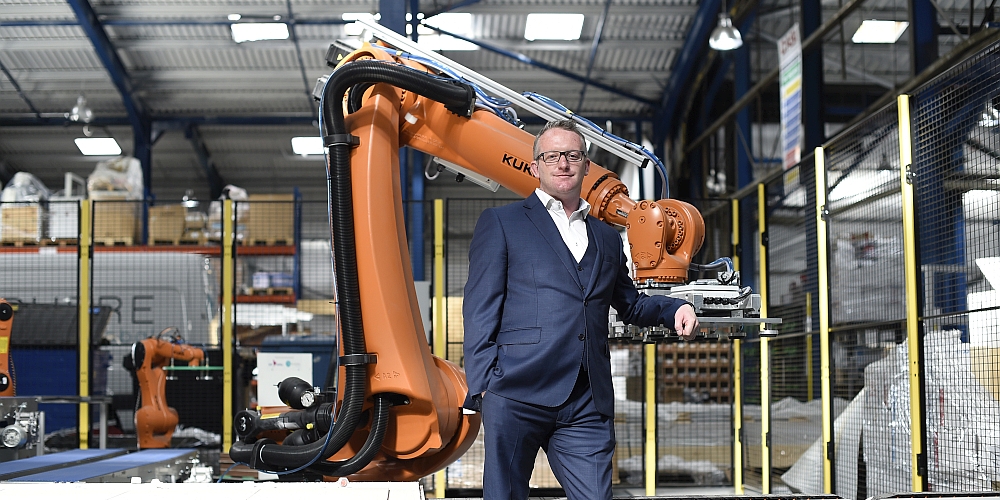
The 2016 Advanced Manufacturing, Materials & Engineering Report
The AMME sector is export and R&D intensive and includes sectors such as aerospace, polymers and materials handling as well as some highly specialist companies – all with a focus on advanced manufacturing, materials and engineering. There are over 2,000 such businesses in Northern Ireland, employing over 40,000 people, paying salaries 26% above the NI average and generating sales worth £7.2bn in 2014.

The Farmer Review of the UK Construction Labour Model
This review is intended to provoke debate as to the current and likely future state of the contruction industry and identifies the urgent actions needed to lead a change agenda that will safeguard the industry’s future.

Health and care workforce futures – Future demand for skills: Initial results
In this report, Horizon 2035 outlines some initial results and messages from their work to date. A final publication will follow once all analysis of this extensive work has been completed and verified.
Agri-Tech Industrial Strategy: Evaluation Scoping Study and Baseline
This evaluation scoping study and baseline had two main objectives: to estimate the current size of the Agri-Tech sector and to make projections for the sector based on its current structure and global trends up to the 2030.